Seoul Lantern Festival is a major winter night festival held along Cheonggyecheon Stream and Uicheon in central Seoul, featuring around 500 traditional hanji lanterns and modern light installations from December 12, 2025 to January 4, 2026. It runs daily in the evening, turning the city center into a pedestrian‑friendly light promenade connected to nearby winter markets and cultural spaces. For more information about the winter markets focus on street food, click here to see my previous posting.
What is the Seoul Lantern Festival?
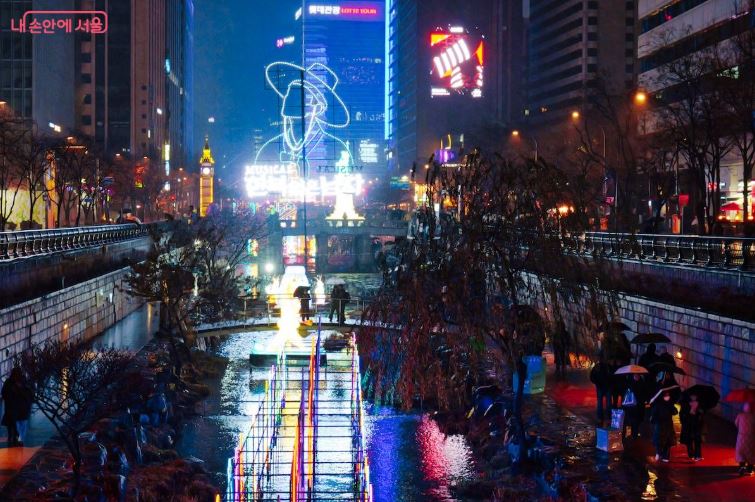
Seoul Lantern Festival (also called “Seoul Light Festival” in some guides) is a large outdoor event where illuminated sculptures, traditional lanterns, and media‑art pieces line a 1.3 km section of Cheonggyecheon from Cheonggye Plaza to Samilgyo Bridge, plus an additional course along Uicheon. The 2025 edition uses the theme “My Light, Our Dream, Seoul’s Magic,” blending historical motifs like royal processions with contemporary subjects such as global landmarks and character collaborations.
The festival is family‑friendly and free to enter, with some optional hands‑on programs and experiences that charge small fees, so visitors can choose to simply stroll or add paid activities depending on time and budget. Because the route is relatively flat and well‑paved, it suits visitors of different ages, and there are plenty of photo zones designed for social media sharing using the “Seoul Lantern Festival” keyword.
Zones and highlights
The Cheonggyecheon section is divided into four main themed zones, each offering a different atmosphere while remaining connected along the stream. In Zone 1, “Miracle Seoul” (Cheonggye Plaza–Gwangtonggyo), media art and traditional lanterns combine; the signature work “The Moment of Lighting the Lantern” is set against the plaza waterfall and symbolizes Seoul’s beginnings and bright future.
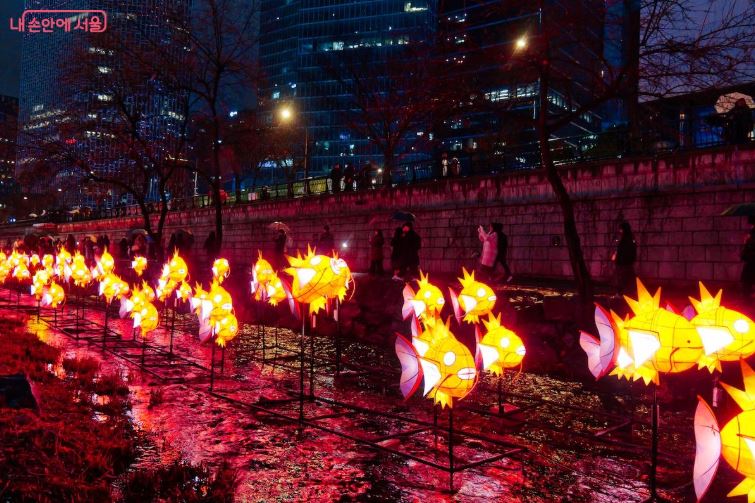
Zone 2, “Companion Seoul” around Gwangtonggyo Bridge, showcases collaborative works with brands and overseas partners, such as a giant hanji Magikarp leaping from the water, Emart’s whale and starfish characters, and pieces representing Taiwanese and Czech culture, emphasizing the global character of Seoul Lantern Festival. Zone 3, “Fairy‑Tale Memories” near Jangtonggyo, focuses on fairy‑tale imagery like snowmen, Santa Claus, and storybook characters, creating a cozy, nostalgic mood ideal for families with children.
Zone 4, “Footsteps of Light” (Jangtonggyo–Samilgyo), highlights Korean history and royal culture with large lanterns depicting royal processions and banquets from the Joseon Dynasty, offering an indirect experience of palace life and traditional lantern craftsmanship. Beyond Cheonggyecheon, Uicheon (from Uigyo to Suyugyo) also hosts installations, making it a good choice if you prefer a slightly less crowded course while still enjoying the core Seoul Lantern Festival atmosphere.
How to get there
Seoul Lantern Festival takes place in the very center of Seoul, so public transportation is the most convenient and SEO‑friendly recommendation for visitors searching how to reach Cheonggyecheon and Gwanghwamun by subway. Major nearby stations include City Hall Station on Lines 1 and 2, Gwanghwamun Station on Line 5, and Jonggak and Euljiro 1‑ga Stations on Line 1, all within a short walk of different entry points to the stream and the lantern route.
Cheonggye Plaza, where many people start their Seoul Lantern Festival walk, is especially easy to access from City Hall Station Exit 4 or Gwanghwamun Station Exit 5, from which you can reach the plaza in roughly five minutes on foot. For those approaching the Samilgyo side or wanting to begin at the far end and walk back toward Gwanghwamun and City Hall, nearby subway stops such as Jonggak or Euljiro 3‑ga are convenient choices frequently mentioned in festival travel guides.
Because the event runs in the busy downtown area and parking is scarce and often expensive, visitors researching “Seoul Lantern Festival parking” generally find that using public transport is strongly recommended over driving. Walking the full course from Cheonggye Plaza to Samilgyo Bridge takes about 15 minutes at a slow pace without photo stops, but in practice, most people spend an hour or more enjoying the displays and taking pictures.
Street food and nearby markets
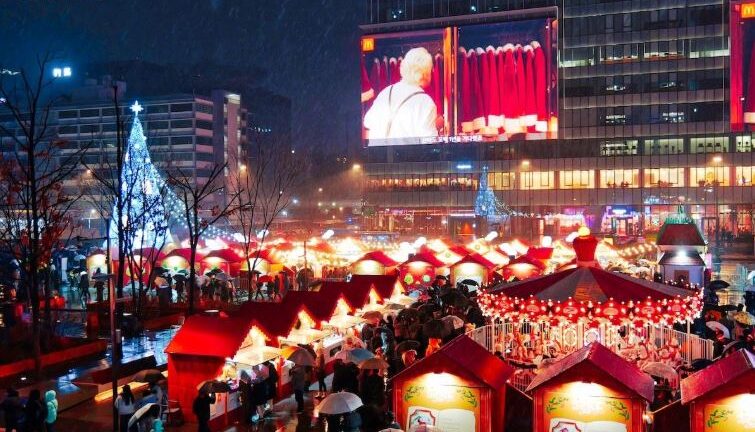
One of the advantages of Seoul Lantern Festival is its proximity to popular food streets and winter markets, which is important for travelers searching phrases like “Seoul Lantern Festival street food” or “what to eat near Cheonggyecheon.” At Gwanghwamun Square, connected to the festival route, a Christmas Market operates with warm drinks, simple snacks, and craft vendors, allowing visitors to warm up between photo sessions and pick up handmade souvenirs from local small businesses.
Around Jonggak and Jongno, visitors can easily reach traditional markets and alleyways that specialize in Korean comfort food, including tteokbokki, hotteok (sweet stuffed pancakes), fish cakes on skewers, and skewered meats—typical items that appear in online lists of Seoul winter street food. Not far away, larger markets such as Gwangjang Market (near Jongno 5‑ga) are known for dishes like bindaetteok (mung bean pancakes), mayak gimbap, and sundae, making them a popular pre‑ or post‑festival stop in many Seoul Lantern Festival itineraries.
Along the upper level of Cheonggyecheon and near City Hall or Myeongdong, there are also numerous cafés and bakeries where visitors can rest, charge devices, and upload photos and videos tagged with “Seoul Lantern Festival” to social media, which helps the event maintain strong online visibility. Since the festival runs into late evening, it is easy to combine a lantern walk with a casual dinner in nearby neighborhoods like Myeongdong, Jongno, or Gwanghwamun, all of which feature a mix of international and Korean dining options popular with tourists and locals.
Practical tips for visiting
Seoul Lantern Festival lights are usually turned on from 18:00 and turned off around 22:00, and access down to the stream level can begin to close shortly before the end time, so it is wise to arrive at least one to two hours before the lights go off. Weekends and days around Christmas and New Year’s Eve tend to be the most crowded, so visitors searching for “best time to visit Seoul Lantern Festival” often aim for weekday evenings or arrive close to opening time for a more relaxed walk.
Admission to Seoul Lantern Festival is free, which makes it attractive for budget travelers, but some interactive programs, crafts, or special activities charge modest fees, so bringing a small amount of cash or a working local payment card is still useful. Because it is an outdoor winter festival, warm clothing, comfortable footwear, and gloves are strongly recommended, and many travel blogs advise planning a short café stop or hot drink break in Gwanghwamun or Jongno as part of a complete Seoul Lantern Festival experience.